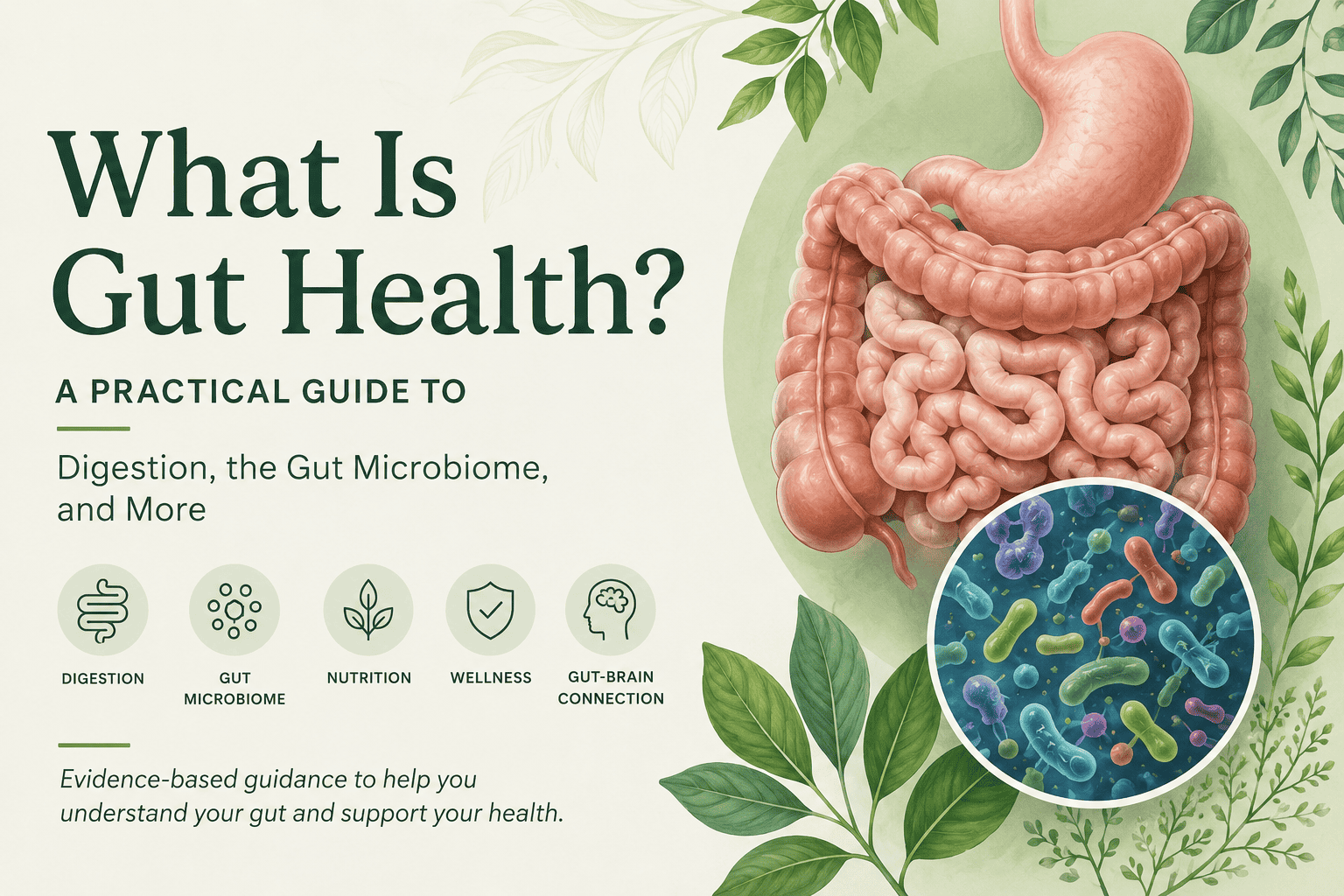
What Is Gut Health? A Practical Guide to Digestion, the Gut Microbiome, and More
Category: Gut Health
Gut health has become one of the most talked-about topics in wellness, but the term is often used in different ways. Some people use it to describe digestion, while others are referring to the gut microbiome, nutrient absorption, or even the connection between the gut and overall health.
So, what does “gut health” actually mean?
In simple terms, gut health refers to how well your digestive system functions and how the different parts of that system—including the gut microbiome—work together to support digestion, nutrient absorption, and other important processes in the body.
This guide provides an evidence-based introduction to gut health, how digestion works, and the everyday habits that may support digestive wellness.
What Is the Digestive System?
The digestive system is responsible for breaking down the food and beverages we consume into nutrients that the body can absorb and use for energy, growth, and cell repair.
The digestive system includes:
- Mouth
- Esophagus
- Stomach
- Small intestine
- Large intestine (colon)
- Liver
- Pancreas
- Gallbladder
Digestion begins in the mouth and continues as food moves through the gastrointestinal (GI) tract. Digestive juices, enzymes, bile, and muscular movements help break food into smaller components that the body can absorb.
How Digestion Works
Digestion is a complex process involving both mechanical and chemical actions.
Mouth
Chewing breaks food into smaller pieces while saliva begins digesting certain carbohydrates.
Stomach
The stomach mixes food with acid and digestive enzymes, helping break down proteins.
Small Intestine
Most nutrient absorption takes place in the small intestine. Digestive enzymes from the pancreas and bile from the liver help break down carbohydrates, fats, and proteins.
Large Intestine
The large intestine absorbs water and contains many of the microorganisms that make up the gut microbiome.
What Is the Gut Microbiome?
The gut microbiome is the collection of bacteria, fungi, viruses, and other microorganisms that naturally live in the digestive tract.
Scientists continue to study how the microbiome influences digestion, immune function, metabolism, and other aspects of health. While research is ongoing, it is clear that these microorganisms play an important role in helping break down certain foods and supporting normal digestive processes.
The microbiome is highly individual, and many factors may influence it, including:
- Diet
- Fiber intake
- Physical activity
- Sleep
- Stress
- Medications, including antibiotics
- Age
Because research in this field is rapidly evolving, it is important to distinguish between well-established findings and emerging theories.
Why Fiber Matters
Fiber is one of the most important dietary components for digestive health.
Unlike many carbohydrates, fiber is not fully digested by the body. Certain types of fiber can help support regular bowel movements, while others may serve as a food source for some beneficial gut microorganisms.
Good sources of fiber include:
- Fruits
- Vegetables
- Beans and lentils
- Whole grains
- Nuts and seeds
Increasing fiber intake gradually—and drinking adequate fluids—may help reduce digestive discomfort that sometimes occurs with sudden increases in fiber intake.
Lifestyle Factors That Can Influence Gut Health
Gut health is influenced by more than food alone.
Several lifestyle factors may play a role in digestive wellness, including:
Physical Activity
Regular movement supports overall health and may influence digestive function.
Sleep
Sleep is important for many body systems, including processes related to metabolism and general well-being.
Stress Management
The digestive system and nervous system communicate through complex pathways often referred to as the gut-brain connection. Researchers continue to study how stress may affect digestive symptoms in some individuals.
Common Misconceptions About Gut Health
Because gut health is a popular topic, misinformation is common.
Myth: Everyone needs probiotics.
Probiotics are not all the same. Different strains have been studied for different purposes, and not every product has the same evidence behind it.
Myth: A healthy gut can be measured by a single test.
There is currently no single test that defines overall gut health for everyone.
Myth: More supplements always mean better gut health.
Diet, lifestyle, and overall health habits often play an important role alongside supplements.
When to Speak With a Healthcare Professional
Digestive symptoms can have many causes.
If you experience persistent symptoms such as:
- Ongoing abdominal pain
- Blood in the stool
- Unexplained weight loss
- Persistent diarrhea
- Severe constipation
- Difficulty swallowing
it is important to consult a qualified healthcare professional for evaluation.
Key Takeaways
Gut health involves much more than digestion alone. It includes:
- The function of the digestive system
- Nutrient absorption
- The gut microbiome
- Diet and fiber intake
- Lifestyle factors such as sleep, stress, and physical activity
While research into the gut microbiome continues to evolve, many of the fundamentals of digestive wellness remain consistent: a balanced diet, adequate fiber, regular physical activity, good sleep, and informed health decisions can all contribute to overall well-being.
At Calm Health Lab, our goal is to provide practical, evidence-based information that helps you better understand your health and make confident choices.