
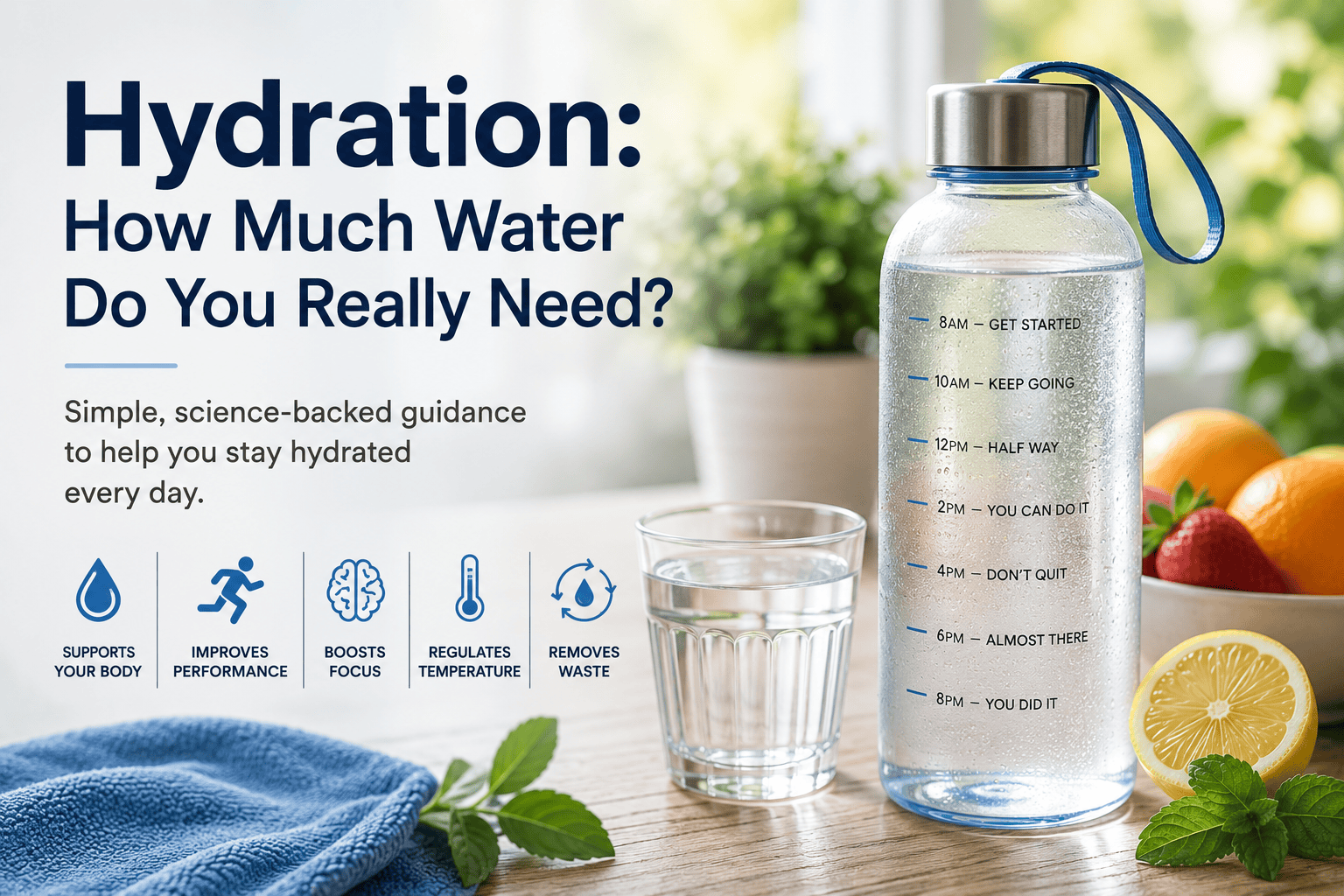
Hydration: How Much Water Do You Really Need?
Water is easy to take for granted. We drink it when we are thirsty, pour a glass with meals, and use it throughout the day without thinking much about it.
But how much water do you actually need?
You may have heard that everyone should drink eight glasses of water a day. You may also have seen recommendations to drink a gallon a day, carry a large water bottle everywhere, or constantly sip water whether you are thirsty or not.
The reality is more flexible.
Your hydration needs depend on factors such as your body size, activity level, environment, diet, age, pregnancy or breastfeeding status, and overall health. Your body also gets water from foods and from beverages other than plain water.
The goal is not to hit a perfect number every day. It is to consistently give your body enough fluid to replace what you lose and support normal body functions.
This guide explains how hydration works, how much water adults generally need, how to recognize dehydration, when you may need more fluids, and practical ways to stay hydrated without constantly thinking about it.
What Does Hydration Mean?
Hydration simply refers to having enough water and fluid in your body for normal physiological function.
Your body is constantly losing water through urine, sweat, breathing, and bowel movements. You replace that water through drinking and eating.
The Centers for Disease Control and Prevention (CDC) notes that getting enough water helps the body function normally and can help prevent dehydration. Water also helps regulate body temperature, lubricate and cushion joints, protect sensitive tissues, and remove waste through urination, perspiration, and bowel movements.
Hydration is therefore not just about drinking water. It is about maintaining an appropriate balance between fluid coming into your body and fluid leaving it.
How Much Water Do You Really Need?
There is no single amount of water that every adult needs to drink each day.
One of the most frequently cited reference points comes from the National Academies’ Dietary Reference Intakes for Water.
For adults, the Adequate Intake for total water is approximately:
- 3.7 liters per day for men
- 2.7 liters per day for women
But there is an important detail here.
These figures refer to total water from all sources, including drinking water, other beverages, and water contained in food. They are not recommendations to drink 3.7 or 2.7 liters of plain water every day.
In the National Academies’ reference data, beverages supplied roughly 3.0 liters of the total for men and 2.2 liters for women, while food supplied the remainder.
The National Academies also emphasizes that these values are Adequate Intakes rather than precise requirements for every individual.
In other words, they are useful reference points—not a daily hydration scorecard.
Source reference: National Academies, Dietary Reference Intakes for Water
Why You Don’t Have to Drink Exactly Eight Glasses
The idea that everyone needs eight 8-ounce glasses of water every day is easy to remember, but it is not a universal requirement.
Your body regulates water balance through several systems, including thirst and the kidneys.
For healthy adults living under ordinary conditions, thirst and normal drinking patterns can help regulate fluid intake. The National Academies concluded that healthy people can maintain normal hydration across a fairly wide range of water intakes.
That means you do not necessarily need to measure every glass of water you drink.
Instead, think of hydration as something you maintain throughout the day.
Drink when you are thirsty. Drink with meals. Drink more when you are losing more fluid. And pay attention to signs that you may need additional fluids.
Where Does Your Water Come From?
When people think about hydration, they usually think about a glass of water.
But plain water is only one source.
Water and other beverages
Water, sparkling water, milk, unsweetened tea, coffee, and other beverages can all contribute to your total fluid intake.
The CDC notes that several low- or no-calorie beverages can fit into a healthy eating pattern, including plain coffee and tea, sparkling water, and flavored waters.
Water is often the simplest everyday choice, especially because it contains no calories and can replace sugary drinks.
Source reference: CDC, About Water and Healthier Drinks
Food
Food contributes water, too.
Fruits and vegetables with high water content can make a meaningful contribution to overall fluid intake. Soups, yogurt, milk, and other foods also contain water.
This is another reason why hydration should not be viewed as a matter of counting only glasses or bottles of plain water.
Your overall diet contributes to your body’s water supply.
What Does Water Actually Do for Your Body?
Water is involved in many everyday functions.
Temperature regulation
Your body uses water to help regulate temperature. Sweating is one of the most obvious examples.
When sweat evaporates from your skin, it helps remove heat from your body. Losing too much fluid without replacing it can make it harder to maintain normal body temperature, particularly in hot environments.
Waste removal
Your kidneys use water as part of the process of filtering and removing waste from the body.
Urine is one of the main ways your body gets rid of excess water and dissolved waste products.
Digestion and bowel function
Adequate fluid intake supports normal digestive function. Dehydration can contribute to constipation, particularly when combined with low dietary fiber or other factors.
This is one reason hydration fits naturally alongside the Nutrition and Gut Health topics we cover at Calm Health Lab.
Physical performance
Fluid losses become more important when you are physically active, particularly in hot or humid conditions.
Sweating reduces body water, and replacing those losses helps support normal physical function.
The CDC specifically recommends paying attention to hydration during physical activity and hot weather.
How Do You Know If You’re Dehydrated?
Mild dehydration can be difficult to recognize because some symptoms are nonspecific.
Common signs can include:
- Thirst
- Dry mouth
- Darker-colored urine
- Urinating less often than usual
- Feeling tired
- Headache
- Dizziness or light-headedness
- Reduced sweating
MedlinePlus lists thirst, dry mouth, reduced urination, dark-colored urine, tiredness, and dizziness among common symptoms of dehydration in adults.
Source reference: MedlinePlus, Dehydration
More serious dehydration can cause confusion, fainting, rapid heartbeat, rapid breathing, or very little or no urination.
Severe dehydration can be a medical emergency.
Can Urine Color Tell You If You’re Hydrated?
Urine color can provide a useful clue, but it is not a perfect hydration test.
In general, pale yellow urine is commonly associated with adequate hydration, while darker urine can occur when your body is conserving water.
The CDC notes that light-yellow or clear urine usually indicates that you are drinking enough water, particularly in the context of hot-weather guidance.
However, urine color can be affected by medications, foods, supplements, and certain health conditions. It should therefore be treated as one clue rather than a precise measurement.
If your urine is consistently very dark, you are urinating much less than usual, or you have other symptoms of dehydration, it is worth paying closer attention to your fluid intake and, when appropriate, speaking with a healthcare professional.
When Do You Need More Water?
Your usual fluid needs can increase when you are losing more water than normal.
Hot weather
Heat increases fluid loss through sweating.
The CDC recommends drinking plenty of fluids during hot weather and paying attention to symptoms such as dizziness, weakness, headache, nausea, and heavy sweating.
Source reference: CDC, About Heat and Your Health
Exercise
Physical activity increases fluid loss, particularly when you sweat heavily.
The amount you need depends on the duration and intensity of the activity, the temperature, humidity, clothing, and your individual sweat rate.
A short, moderate workout in comfortable conditions generally creates very different hydration needs from several hours of strenuous exercise in hot weather.
Fever, vomiting, or diarrhea
Illness can increase fluid losses or make it harder to drink enough.
Vomiting and diarrhea can cause significant losses of both fluid and electrolytes. If you are unable to keep fluids down or are experiencing significant symptoms of dehydration, medical advice may be necessary.
Source reference: MedlinePlus, Dehydration; NIDDK, Symptoms and Causes of Viral Gastroenteritis
Pregnancy and breastfeeding
Fluid needs can change during pregnancy and breastfeeding.
The National Academies lists higher total-water Adequate Intakes for pregnancy and lactation than for nonpregnant women.
Rather than applying a generic water target, people who are pregnant or breastfeeding should follow guidance from their healthcare professional, particularly if they have additional medical considerations.
Do You Need More Water When You Exercise?
Sometimes—but there is no universal number.
For everyday activity, drinking water regularly throughout the day is generally sufficient for most healthy people.
Longer or more intense exercise, especially in heat, can create substantially greater fluid losses.
The CDC advises people exercising in hot conditions to drink more water than usual and to stop activity and move to a cooler location if they feel faint or weak.
For prolonged exercise or heavy sweating, electrolyte replacement may sometimes be appropriate. But that does not mean everyone needs sports drinks for ordinary workouts.
For a typical walk, strength-training session, or moderate workout, plain water is often an excellent choice.
Do You Need Electrolyte Drinks?
Not necessarily.
Electrolytes such as sodium and potassium are important minerals involved in fluid balance, nerve function, and muscle function.
But most healthy people do not need a specialized electrolyte drink simply because they exercised.
For ordinary daily hydration and many routine workouts, water is usually enough.
Electrolyte-containing beverages can become more relevant during prolonged exercise, heavy sweating, significant fluid losses, or certain illnesses.
At the same time, many commercial sports drinks contain added sugar and calories. The CDC recommends considering water and other healthier beverage choices rather than automatically reaching for sweetened drinks.
If you are losing substantial fluids because of vomiting or diarrhea, an appropriate oral rehydration solution may be more useful than a typical sports drink because it is specifically formulated to replace fluids and electrolytes.
What About Coffee and Tea?
You do not necessarily need to avoid coffee or tea because they contain caffeine.
Caffeinated beverages still contribute fluid.
The National Academies notes that although caffeine can have a temporary diuretic effect in some circumstances, caffeinated beverages still contribute to overall fluid intake.
The bigger question is what else comes with the beverage.
Plain coffee or tea can be relatively low in calories, while heavily sweetened coffee drinks can add substantial amounts of sugar and calories.
So from a hydration perspective, you generally do not need to treat ordinary coffee or tea as if it does not count.
What About Alcohol?
Alcohol is a different story.
Alcohol can increase fluid loss and can also make it easier to overlook normal hydration habits.
If you drink alcohol, alternating alcoholic beverages with water can help you maintain fluid intake, but water does not eliminate the other health effects of alcohol.
Hydration should not be used as a reason to drink more alcohol.
Simple Ways to Drink More Water
If you regularly forget to drink enough, you do not need a complicated hydration system.
Try a few simple habits.
1. Keep water visible
A reusable bottle on your desk, kitchen counter, or in your bag can make drinking water more automatic.
2. Drink with meals
Having water with breakfast, lunch, and dinner creates three easy opportunities to drink regularly.
3. Carry water when you’re away from home
The CDC recommends carrying a reusable water bottle as a practical way to make water more available throughout the day.
4. Add flavor if you prefer it
Lemon, lime, cucumber, mint, or fruit can make water more appealing without requiring a sugary beverage.
5. Choose water more often than sugary drinks
Replacing sugar-sweetened beverages with water can reduce calorie intake while helping you stay hydrated.
6. Drink more when conditions call for it
Hot weather, exercise, fever, vomiting, and diarrhea can all increase fluid needs.
The goal is not to force down a huge amount of water every day. It is to adjust your intake to your circumstances.
Can You Drink Too Much Water?
Yes.
More water is not always better.
Drinking an excessive amount of water in a short period can dilute the sodium concentration in your blood, a potentially dangerous condition known as hyponatremia.
This is particularly relevant during prolonged endurance exercise or situations where someone is intentionally forcing large quantities of water despite not needing them.
The CDC and National Academies both support the broader idea that hydration needs vary and that excessive fluid intake is not a substitute for individualized hydration.
For everyday life, you generally do not need to constantly force yourself to drink water beyond thirst and normal fluid needs.
Who May Need Individualized Fluid Advice?
The general guidance in this article is intended for generally healthy adults.
Your fluid needs may be different if you have certain medical conditions or take medications that affect fluid balance.
This can include some people with:
- Kidney disease
- Heart failure
- Certain endocrine conditions
- Conditions that cause excessive fluid loss
- Conditions requiring fluid restriction
- Certain gastrointestinal illnesses
Some medications can also affect how much water your body retains or loses.
If you have been told to restrict fluids—or if you have a medical condition that affects your kidneys, heart, electrolytes, or fluid balance—do not simply increase your water intake based on a general internet recommendation. Follow the guidance of your healthcare professional.
A Simple Approach to Everyday Hydration
For most healthy adults, hydration does not need to become another thing to obsess over.
A simple routine is often enough:
Morning: Have water with breakfast and drink according to thirst.
During the day: Keep water available and drink regularly, especially with meals.
Before activity: Start exercise reasonably hydrated.
During activity: Drink according to the duration, intensity, temperature, and amount you are sweating.
After activity: Replace fluids you have lost.
In hot weather: Drink more and pay attention to symptoms of heat illness.
When sick: Pay particular attention to fluid intake if you have fever, vomiting, or diarrhea.
This approach is much more practical than trying to hit an arbitrary number every single day.
Common Questions About Hydration
Is eight glasses of water a day enough?
Eight glasses may be a useful reminder to drink regularly, but it is not a universal requirement. Individual fluid needs vary, and total water intake includes water from food and beverages.
Does coffee count toward hydration?
Yes. Coffee and tea contribute fluid. Caffeine can have a mild, temporary diuretic effect, but caffeinated beverages still contribute to total fluid intake.
Is clear urine always better?
Not necessarily. Pale yellow urine is generally a reasonable sign of hydration. Constantly forcing water until your urine is completely clear is not necessary for most people.
Should I drink water even when I’m not thirsty?
For most healthy adults in ordinary conditions, thirst is a useful guide. You may need to be more intentional about drinking during heat, prolonged exercise, illness, or situations where thirst may not reliably signal your needs.
Are sports drinks better than water?
Usually not for ordinary daily hydration or short, moderate exercise. Sports drinks may have a role during prolonged or strenuous activity involving substantial fluid and electrolyte losses.
Does drinking more water help you lose weight?
Replacing high-calorie sugary beverages with water can reduce calorie intake. However, simply drinking excessive amounts of water is not a weight-loss strategy.
The Bigger Picture
Hydration is one part of a healthy lifestyle, not a standalone health goal.
Your body needs water, but it also needs adequate nutrition, regular physical activity, quality sleep, and healthy ways to manage everyday stress.
That is why hydration fits naturally alongside the other topics in our Healthy Living section. If you are building healthier daily habits, the goal is not to optimize one variable while ignoring everything else. It is to create a balanced routine that supports your overall well-being.
And just as there is no single perfect diet, there is no single perfect water intake that applies to everyone.
The Bottom Line
Most healthy adults can maintain good hydration without constantly measuring every ounce of water they drink.
Your needs depend on your body, activity level, environment, diet, age, and health. Water and other beverages contribute to your intake, and water-rich foods contribute as well.
A good everyday approach is simple:
- Drink regularly throughout the day.
- Let thirst guide much of your intake under normal conditions.
- Drink more when you are sweating heavily, exercising for longer periods, or spending time in hot weather.
- Pay attention to signs of dehydration.
- Choose water often, particularly instead of sugary drinks.
- Don’t assume that more water is always better.
- Get individualized advice if a medical condition or medication affects your fluid balance.
Hydration does not have to be complicated. For most people, consistent everyday habits matter much more than hitting a perfect number.
Sources
- Centers for Disease Control and Prevention (CDC). About Water and Healthier Drinks.
- Centers for Disease Control and Prevention (CDC). About Heat and Your Health.
- National Academies of Sciences, Engineering, and Medicine. Dietary Reference Intakes for Water, Potassium, Sodium, Chloride, and Sulfate.
- MedlinePlus / U.S. National Library of Medicine. Dehydration.
- National Institute of Diabetes and Digestive and Kidney Diseases (NIDDK). Symptoms and Causes of Viral Gastroenteritis.
- National Academies of Sciences, Engineering, and Medicine. Dietary Reference Intakes: Recommended Intakes for Individuals.