Protein: Why Your Body Needs It and How Much Do You Need?
Protein is often associated with muscle, fitness, and high-protein diets, but its role in the body is much broader than that.
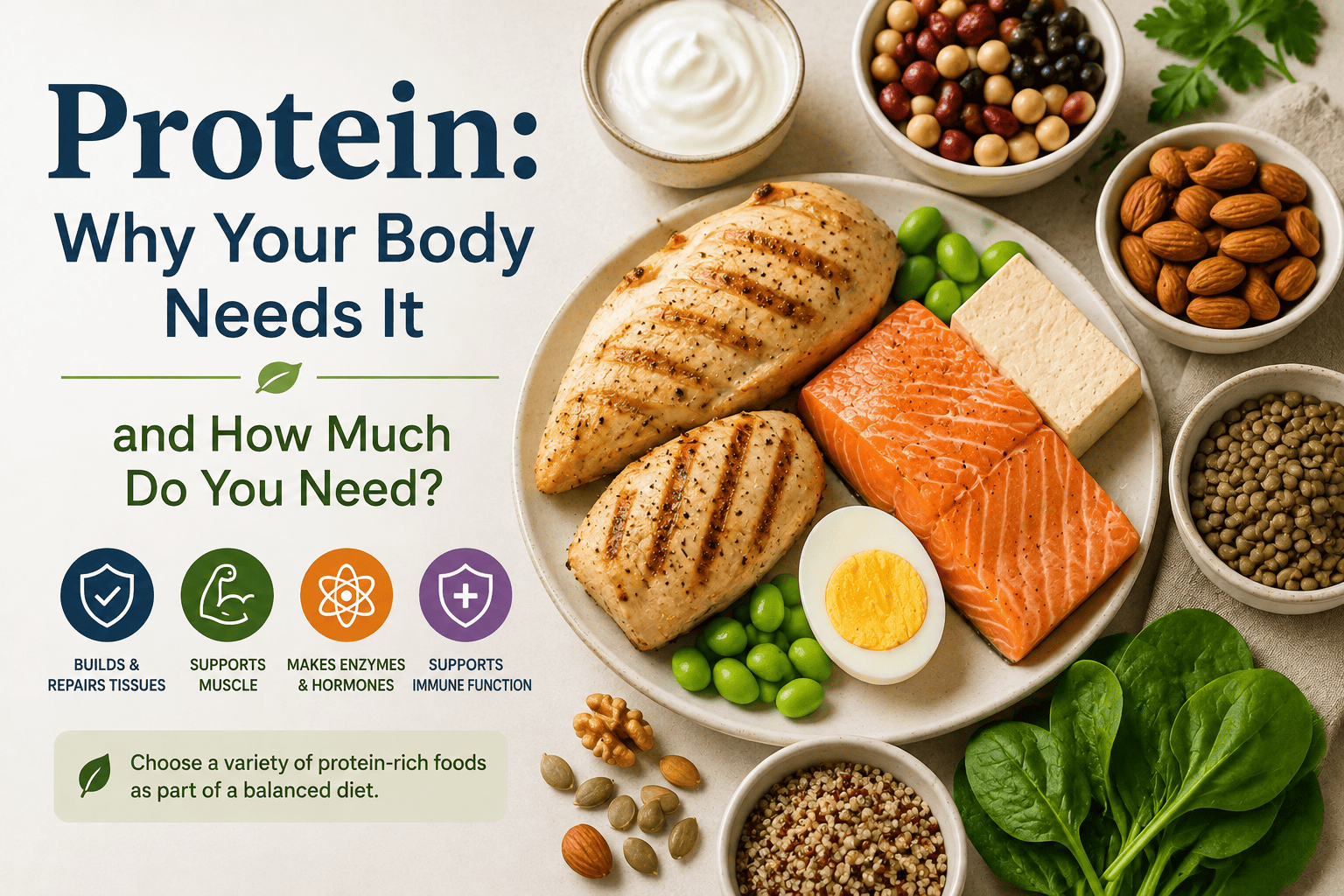
Your body uses protein to build and maintain muscle and other tissues, produce enzymes and hormones, support immune function, and carry out many of the processes that keep you functioning normally. Protein is also one of the three macronutrients, along with carbohydrates and fat, that provide energy from food.
The tricky part is figuring out your own actual protein needs.
The answer isn’t simply “as much as possible.” Protein needs vary depending on factors such as body size, age, activity level, and life stage. And while protein is important, it works best as part of an overall balanced diet rather than as a nutrient that needs to dominate every meal.
If you’re new to nutrition, our guide to What Is Good Nutrition? is a good place to start. This article takes a closer look at one important piece of that bigger picture: protein.
What Is Protein?
Protein is a macronutrient made up of smaller molecules called amino acids.
Your body needs amino acids to build and maintain tissues and to produce many substances involved in normal body function. Some amino acids can be made by the body, while others—known as essential amino acids—must come from food.
Protein is found in a wide variety of foods, including:
- Meat and poultry
- Fish and seafood
- Eggs
- Milk, yogurt, and other dairy foods
- Beans, peas, and lentils
- Soy foods such as tofu and tempeh
- Nuts and seeds
- Some whole grains and other plant foods
The good news is that you don’t need to eat animal products to get adequate protein. Plant-based eating patterns can provide protein through combinations of foods such as beans, lentils, soy, nuts, seeds, and whole grains.
The Dietary Guidelines for Americans include both animal and plant foods in the protein foods group and emphasize choosing a variety of nutrient-dense protein sources.
Why Does Your Body Need Protein?
Protein has several important jobs.
1. Protein helps build and maintain muscle
Muscle tissue is constantly being broken down and rebuilt. Dietary protein provides amino acids that the body can use in this process.
This becomes particularly important as we age because maintaining muscle mass and physical function becomes increasingly important for healthy aging.
Protein alone, however, isn’t a magic solution for building muscle. Physical activity—particularly resistance exercise—is an important part of stimulating muscle adaptation.
That’s one reason it’s better to think about protein as part of an overall healthy lifestyle rather than as a standalone “muscle-building” nutrient.
2. Protein helps maintain other body tissues
Protein isn’t only about muscle.
Your body uses protein as a structural component of many tissues and cells. Protein also plays roles in connective tissue, skin, hair, and other structures throughout the body.
Your body is continually repairing and replacing cells and tissues, which means it needs a regular supply of amino acids.
3. Protein is involved in enzymes and hormones
Many enzymes that help chemical reactions occur in the body are proteins.
Protein also contributes to the production of numerous hormones and signaling molecules involved in regulating normal physiological processes.
In other words, protein isn’t simply something your muscles “use.” It participates in an enormous number of processes happening throughout your body.
4. Protein supports normal immune function
The immune system relies on proteins and amino acids to build many of its components.
Adequate protein intake is therefore part of maintaining normal immune function, although eating extra protein doesn’t automatically make someone healthier or prevent illness.
As with most nutrition questions, adequacy matters more than excess.
5. Protein can help make meals satisfying
Protein can contribute to feelings of fullness after eating.
This doesn’t mean that a high-protein diet is automatically better for weight management. Overall calorie intake, food quality, dietary pattern, physical activity, sleep, and many other factors can influence body weight.
But including a reasonable source of protein in meals can make a balanced eating pattern easier to maintain.
How Much Protein Do You Actually Need?
This is where things get interesting.
The established Recommended Dietary Allowance (RDA) for protein for healthy adults is 0.8 grams per kilogram of body weight per day. The National Academies developed this value to meet the protein requirements of nearly all healthy adults.
That works out to approximately 0.36 grams per pound of body weight.
For example:
| Body weight | Approximate RDA |
|---|---|
| 120 lb | 43 g/day |
| 140 lb | 51 g/day |
| 160 lb | 58 g/day |
| 180 lb | 65 g/day |
| 200 lb | 73 g/day |
These numbers are useful as a starting point, but they shouldn’t be interpreted as a perfect target for every person.
The current protein RDA is based on preventing deficiency and meeting the basic needs of healthy adults. It doesn’t necessarily represent the amount that would maximize muscle growth, athletic performance, or other specific outcomes.
What About the “50 Grams of Protein a Day” Number?
You may also see 50 grams associated with protein.
That’s because the FDA’s Daily Value for protein is 50 grams based on a 2,000-calorie diet. The Daily Value is designed for food labeling and general nutrition guidance; it isn’t necessarily your personal protein requirement.
Your individual needs can be higher or lower depending on your body size and circumstances.
That’s why calculating protein based on body weight can be more useful than simply trying to reach the number printed on a nutrition label.
Do You Need More Protein If You’re Active?
Possibly.
People who exercise regularly—particularly people participating in resistance training—may have protein needs that are higher than the basic adult RDA.
Research on protein intake and muscle-related outcomes suggests that the amount needed to optimize muscle adaptation can be higher than the minimum amount required to prevent deficiency.
However, this doesn’t mean everyone who exercises needs an enormous amount of protein.
There’s a big difference between:
“Enough protein to meet basic nutritional requirements”
and
“An intake designed to optimize a particular training goal.”
Those are two different questions.
For someone who exercises recreationally and eats a varied diet, focusing on adequate total protein and consistently including protein-rich foods throughout the day is generally a more useful strategy than obsessing over an exact number.
What About Protein as You Get Older?
Age is another reason protein needs deserve some attention.
Older adults can experience changes in muscle metabolism and may be more vulnerable to losing muscle mass and physical function. Research has therefore investigated whether protein intakes above the traditional RDA may be beneficial for older adults.
The evidence is an important reason not to assume that 0.8 g/kg is automatically the ideal target for every older adult.
At the same time, there isn’t a single universally agreed-upon higher protein target that applies to every older person.
Your overall diet, activity level, health status, and ability to eat enough food all matter.
If you’re older and concerned about muscle loss, unintended weight loss, poor appetite, or meeting your nutritional needs, it’s worth discussing your individual protein needs with a physician or registered dietitian rather than relying on a generic internet calculation.
Does It Matter When You Eat Protein?
You may have heard that you need to eat a specific amount of protein at every meal.
There’s some interesting science behind protein distribution, particularly regarding muscle protein synthesis. But the evidence doesn’t support treating one particular meal schedule as a universal rule.
Research has found that protein distribution across meals may influence muscle-related outcomes, but the evidence is not completely consistent, and total daily protein intake remains an important factor.
A practical approach is simply to avoid getting nearly all of your protein at one meal.
For example, instead of having a very low-protein breakfast followed by most of your day’s protein at dinner, you might include a protein source at breakfast, lunch, and dinner.
That could look like:
Breakfast: Greek yogurt, eggs, or a tofu scramble
Lunch: Lentils, chicken, tuna, tofu, or beans
Dinner: Fish, poultry, lean meat, tofu, tempeh, or beans
Snacks: Yogurt, cottage cheese, nuts, seeds, or another protein-rich food
There’s no requirement to make every meal contain exactly the same amount.
Animal Protein vs. Plant Protein
You don’t have to choose one side.
Animal foods can provide highly digestible protein and contain all of the essential amino acids. Plant foods can also provide substantial amounts of protein and bring other nutrients, including fiber and various vitamins, minerals, and beneficial plant compounds.
The Dietary Guidelines for Americans specifically recognize beans, peas, lentils, nuts, seeds, and soy foods as protein sources, alongside meat, poultry, seafood, and eggs.
A varied diet can include both.
For people following vegetarian or vegan diets, paying attention to variety is particularly useful. Foods such as beans, lentils, tofu, tempeh, soy milk, nuts, seeds, and whole grains can all contribute protein.
You don’t need to meticulously combine specific proteins at every meal. Eating a varied diet over the course of the day can provide the amino acids your body needs.
Some of the Best Protein Foods Are Also Nutrient-Dense Foods
One of the most important ideas about protein is that the food providing the protein matters.
Consider two foods that each contain protein. They may have very different nutritional profiles.
A protein source might also provide:
- Fiber
- Healthy fats
- Vitamins
- Minerals
- Omega-3 fatty acids
- Other beneficial plant compounds
This is why the goal shouldn’t simply be to maximize grams of protein.
Instead, think about protein quality within the context of the whole food.
Examples of nutrient-dense protein choices include:
Plant-based options
- Lentils
- Beans
- Chickpeas
- Tofu
- Tempeh
- Edamame
- Nuts
- Seeds
Animal-based options
- Fish
- Seafood
- Eggs
- Plain yogurt
- Cottage cheese
- Poultry
- Lean meats
The Dietary Guidelines recommend choosing a variety of nutrient-dense protein foods and limiting reliance on processed meats.
What About Protein Powders and Protein Bars?
Protein supplements can be convenient, but most people don’t need them simply because protein is important.
If you can meet your protein needs through ordinary foods, there’s no nutritional requirement to use a protein powder.
Protein powders can nevertheless be useful in certain situations—for example, when someone has difficulty eating enough food, has limited appetite, or needs a convenient protein source around a busy schedule.
The important point is that a protein supplement is a supplement to your diet, not a replacement for a nutritious diet.
A protein shake generally doesn’t provide the same range of nutrients you would get from a meal containing vegetables, fruit, whole grains, legumes, or other whole foods.
This is another reason to keep protein needs in perspective.
A Simple Way to Add More Protein to Your Diet
If you’re concerned that you’re not meeting your protein needs, you don’t necessarily need to completely change your diet.
Try making one small adjustment at a time.
At breakfast
Add eggs, Greek yogurt, cottage cheese, tofu, or a protein-rich milk alternative.
At lunch
Add beans, lentils, chicken, tuna, salmon, tofu, or another protein source to your meal.
At dinner
Build your meal around a protein source along with vegetables and a nutrient-dense carbohydrate such as potatoes, brown rice, quinoa, or whole grains.
For snacks
Try yogurt, nuts, seeds, cottage cheese, edamame, or another convenient protein-containing food.
This approach fits nicely with the broader principles we discussed in What Is Good Nutrition? A Practical Guide to a Balanced Diet: build meals around a variety of nutrient-dense foods rather than focusing on a single nutrient in isolation.
And because many plant foods provide both protein and fiber, choosing foods such as beans and lentils can also fit naturally into a diet that supports digestive health. For more on that side of nutrition, see our Gut Health section.
The Bottom Line
Protein is an essential nutrient that your body uses for far more than building muscle.
It helps maintain tissues, supports enzymes and other proteins involved in normal body functions, contributes to immune function, and can make balanced meals more satisfying.
For healthy adults, the established RDA is 0.8 g/kg of body weight per day, but individual protein needs can vary. People who are very physically active, older adults, pregnant or breastfeeding individuals, and people with certain health or nutritional circumstances may have different needs.
The most useful takeaway isn’t that you should eat as much protein as possible.
It’s that adequate protein should be one part of an overall nutritious eating pattern.
Choose a variety of protein foods, include them regularly throughout the day, and consider the nutritional value of the entire food—not just the number of grams of protein on the label.
For most people, that’s a much more practical approach than chasing a perfect protein number.
As we continue building the Calm Health Lab Nutrition section, next we’ll take a closer look at Dietary Fiber: What It Is, Why You Need It, and How to Get More, and Carbohydrates: What They Are, Why Your Body Needs Them, and How to Choose Healthy Sources, and Dietary Fats: The Good, the Bad, and How to Choose Healthy Fats, and Vitamins and Minerals: What Your Body Needs and How to Get Enough so be sure to check those out to learn more about balanced nutrition.
Sources
National Academies of Sciences, Engineering, and Medicine — Dietary Reference Intakes for Energy, Carbohydrate, Fiber, Fat, Fatty Acids, Cholesterol, Protein, and Amino Acids
This is the foundational DRI report containing the adult protein RDA of 0.8 g/kg/day.
National Academies — Dietary Reference Intakes report
NIH Office of Dietary Supplements — Daily Values
Useful for explaining why the Daily Value on a food label isn’t necessarily the same thing as the RDA.
NIH ODS — Daily Values
U.S. Food and Drug Administration — Daily Value on the Nutrition and Supplement Facts Labels
The FDA gives the current protein Daily Value as 50 g.
FDA — Daily Value on Nutrition and Supplement Facts Labels
Dietary Guidelines for Americans
The federal dietary guidance discusses protein foods and recommends including a variety of nutrient-dense protein foods from both animal and plant sources.
Dietary Guidelines for Americans
National Academies / NCBI — Evaluation of Dietary Protein and Amino Acid Requirements: A Systematic Review
This is particularly valuable because it explains that the existing adult RDA is 0.8 g/kg/day, while also noting that the protein DRIs are being evaluated for potential updating based on newer evidence.
Layman, D.K. (2024). “Impacts of protein quantity and distribution on body composition.” Frontiers in Nutrition, 11, 1388986.
Layman (2024) — Impacts of protein quantity and distribution on body composition
Hudson, Bergia & Campbell (2020) — Protein Distribution and Muscle-Related Outcomes: Does the Evidence Support the Concept?
This is the paper you listed by title. The full article is available through PubMed Central.
Protein Distribution and Muscle-Related Outcomes — PubMed Central