Vitamins and Minerals: What Your Body Needs and How to Get Enough
Vitamins and minerals are often grouped together as if they are interchangeable, but they actually play very different roles in the body. Both are essential nutrients, meaning your body needs them to function properly, but they differ in their chemical structure, how they are absorbed, and the jobs they perform.
The good news is that getting enough vitamins and minerals usually does not require a complicated diet or a cabinet full of supplements. For most people, a varied diet built around vegetables, fruits, whole grains, beans, nuts, seeds, dairy or fortified alternatives, seafood, eggs, and other nutrient-rich foods can provide many of the vitamins and minerals the body needs.
But understanding the basics can make it easier to recognize where your diet may have gaps—and when a supplement might actually make sense.
This guide explains what vitamins and minerals do, which foods provide them, how deficiencies can happen, and what to know before reaching for a supplement.
What Are Vitamins and Minerals?
Vitamins and minerals are both micronutrients. Unlike protein, carbohydrates, and dietary fat, which are needed in relatively large amounts, micronutrients are generally required in much smaller quantities.
That does not make them unimportant.
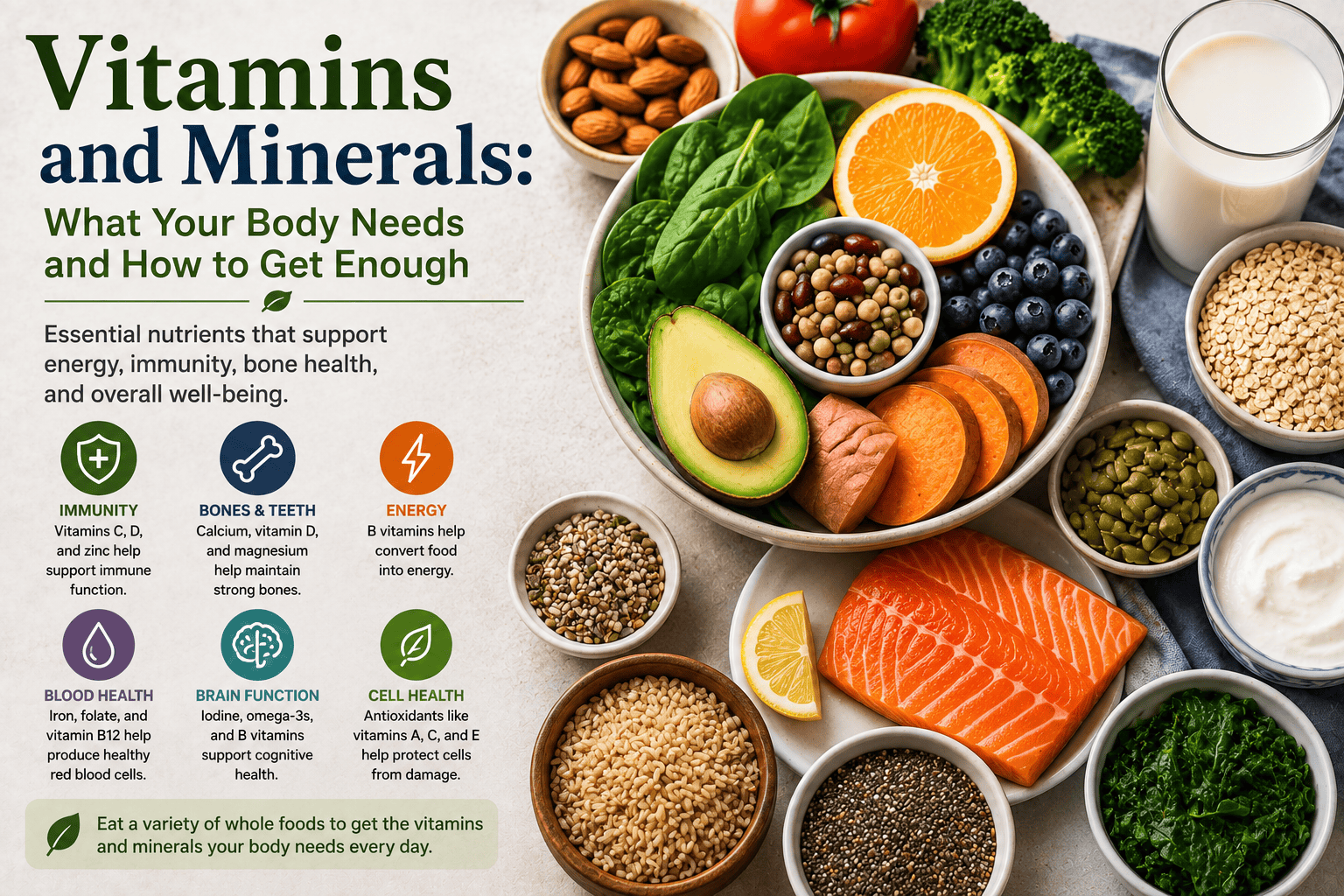
Vitamins and minerals are involved in hundreds of processes throughout the body, including energy metabolism, immune function, bone health, blood formation, nerve function, fluid balance, and normal cell growth.
The National Institutes of Health Office of Dietary Supplements provides evidence-based information on individual vitamins and minerals, including their roles, food sources, recommended amounts, and potential risks.
Vitamins
Vitamins are organic compounds that your body needs for normal growth and function.
There are 13 recognized vitamins:
- Vitamin A
- Vitamin C
- Vitamin D
- Vitamin E
- Vitamin K
- Thiamin (vitamin B1)
- Riboflavin (vitamin B2)
- Niacin (vitamin B3)
- Pantothenic acid (vitamin B5)
- Vitamin B6
- Biotin (vitamin B7)
- Folate (vitamin B9)
- Vitamin B12
They are commonly divided into two groups: fat-soluble and water-soluble vitamins.
Fat-Soluble Vitamins
Vitamins A, D, E, and K are fat-soluble.
These vitamins can be stored in the body’s tissues, particularly the liver and body fat. Because the body can store them, regularly consuming very large amounts from supplements can sometimes create problems.
Water-Soluble Vitamins
Vitamin C and the B vitamins are water-soluble.
The body generally does not store large amounts of most water-soluble vitamins, so regular intake is important. Vitamin B12 is an exception because the body can store substantial amounts of it.
What Are Minerals?
Minerals are elements that occur naturally in the earth and are incorporated into foods and water.
They are generally divided into two groups based on how much the body needs.
Major Minerals
These include:
- Calcium
- Phosphorus
- Magnesium
- Sodium
- Potassium
- Chloride
- Sulfur
They are needed in relatively larger amounts and are involved in functions such as maintaining bones, regulating fluid balance, supporting muscles, and transmitting nerve signals.
Trace Minerals
Trace minerals are needed in smaller amounts but are still essential.
Examples include:
- Iron
- Zinc
- Copper
- Selenium
- Iodine
- Manganese
- Chromium
- Molybdenum
Some trace minerals, such as iron and iodine, are particularly important because inadequate intake can have significant consequences.
Why Do Vitamins and Minerals Matter?
It is tempting to think of vitamins and minerals as a list of individual nutrients, each with its own isolated job.
In reality, many of them work together.
For example, calcium is important for bones and teeth, but vitamin D helps the body absorb calcium. Iron is essential for making hemoglobin, which allows red blood cells to carry oxygen. Folate and vitamin B12 are both involved in making DNA and healthy red blood cells.
Other nutrients support normal immune function, antioxidant defenses, nerve signaling, muscle contraction, and energy metabolism.
This is one reason a balanced diet matters more than simply focusing on one “superfood” or one particular vitamin.
Where Do Vitamins and Minerals Come From?
One of the simplest ways to improve vitamin and mineral intake is to increase the variety of nutrient-dense foods in your diet.
Different foods provide different combinations of nutrients.
Fruits and Vegetables
Fruits and vegetables provide a wide range of vitamins, minerals, fiber, and other beneficial compounds.
Examples include:
- Citrus fruits and strawberries for vitamin C
- Leafy greens for folate and vitamin K
- Orange and yellow vegetables for carotenoids and vitamin A precursors
- Potatoes and other vegetables for potassium
- Avocados for folate and potassium
Eating a variety of colors is a practical way to increase the range of plant foods in your diet.
Whole Grains
Whole grains can contribute several B vitamins and minerals, along with fiber and other components of the grain.
Examples include oats, brown rice, whole-grain bread, barley, and whole-grain cereals.
Our guide to [What Is Good Nutrition?] provides a broader look at how whole grains fit into a balanced eating pattern.
Beans, Peas, and Lentils
Legumes are especially useful because they provide a combination of protein, fiber, and micronutrients.
Depending on the food, they can provide meaningful amounts of iron, magnesium, potassium, folate, and other nutrients.
Nuts and Seeds
Nuts and seeds can contribute magnesium, vitamin E, zinc, selenium, and other nutrients while also providing healthy fats and some protein.
They are nutrient-dense foods, so even relatively small portions can contribute to overall nutrient intake.
Dairy Foods and Fortified Alternatives
Milk, yogurt, and cheese can provide calcium, phosphorus, and other nutrients.
Fortified plant-based beverages can also provide nutrients such as calcium and vitamin D, although the nutritional content varies considerably between products.
Checking the Nutrition Facts label can help you compare products.
Seafood, Meat, Poultry, and Eggs
Animal foods can provide several important micronutrients.
For example:
- Seafood can provide iodine, selenium, zinc, and vitamin B12
- Meat can provide highly absorbable iron and vitamin B12
- Eggs provide several vitamins and minerals, including choline
- Poultry provides nutrients including niacin, vitamin B6, and selenium
This does not mean a healthy diet has to include animal products. People following vegetarian or vegan diets can meet many nutrient needs through plant foods and fortified foods, but certain nutrients—including vitamin B12—may require particular attention.
A Few Vitamins and Minerals Deserve Special Attention
Although all essential vitamins and minerals matter, some come up frequently when discussing nutrition.
Vitamin D
Vitamin D helps the body absorb calcium and is important for bone health.
Very few foods naturally contain large amounts of vitamin D. Fatty fish such as salmon, tuna, and mackerel are among the better food sources, while fortified foods can also contribute.
Sunlight allows the body to produce vitamin D, but the amount produced varies depending on factors such as season, location, skin pigmentation, age, and sun exposure.
Because vitamin D status can be difficult to determine from diet alone, supplementation may be appropriate for some people.
Vitamin B12
Vitamin B12 is important for red blood cell formation, neurological function, and DNA synthesis.
Natural sources are primarily animal foods, although some foods are fortified with B12.
People who eat little or no animal food may need to pay particular attention to B12 intake.
Older adults and people with certain medical or digestive conditions may also have difficulty absorbing enough B12 from food.
Folate
Folate is a B vitamin involved in DNA synthesis and cell division.
It is naturally found in foods such as leafy green vegetables, beans, peas, and some fruits. Many grain products are also fortified with folic acid, the form of folate used in fortified foods and supplements.
Folate is particularly important during pregnancy, which is one reason folic acid supplementation is routinely recommended for people who may become pregnant.
Iron
Iron is needed to make hemoglobin and other proteins involved in oxygen transport and metabolism.
Food provides iron in two forms. Heme iron is found in animal foods, while nonheme iron is found in plant foods and fortified foods.
Beans, lentils, spinach, fortified cereals, meat, poultry, and seafood can all contribute iron.
Vitamin C can improve absorption of nonheme iron, which is one reason pairing plant sources of iron with vitamin-C-rich foods can be useful.
Calcium
Calcium is best known for its role in bones and teeth, but it is also involved in muscle contraction, nerve transmission, and other normal functions.
Dairy products are common sources, but calcium can also come from fortified plant beverages, tofu made with calcium, canned fish with edible bones, and certain vegetables.
Vitamin D also plays an important role in calcium absorption.
Magnesium
Magnesium is involved in hundreds of biochemical reactions and contributes to normal muscle and nerve function, blood glucose regulation, and other processes.
Good food sources include nuts, seeds, whole grains, beans, and leafy green vegetables.
Potassium
Potassium is an essential mineral involved in fluid balance, nerve transmission, and muscle contraction.
Fruits, vegetables, beans, dairy products, and several other foods can contribute potassium.
Because potassium needs to be considered alongside sodium as part of a healthy dietary pattern, focusing on overall food choices is generally more useful than simply trying to maximize one mineral.
Can You Get Enough Vitamins and Minerals From Food?
For many people, yes.
The Dietary Guidelines for Americans emphasize getting nutrients primarily from food and beverages because whole foods provide more than isolated vitamins and minerals. They also provide protein, fiber, healthy fats, carbohydrates, and other compounds that contribute to a healthy dietary pattern.
That is an important distinction.
A vitamin C supplement, for example, can provide vitamin C. An orange provides vitamin C along with water, carbohydrate, fiber, and other plant compounds.
Likewise, a magnesium supplement provides magnesium, while nuts, seeds, beans, and whole grains provide magnesium along with protein, fiber, unsaturated fats, and other nutrients.
Supplements can be useful when dietary intake is inadequate or when a particular life stage or health circumstance increases nutrient needs. But they should generally complement a healthy eating pattern rather than replace it.
Does Everyone Need a Multivitamin?
No.
A multivitamin can help some people increase their intake of nutrients they may otherwise have difficulty getting from food. But taking one does not automatically make an otherwise poor diet healthy.
The NIH Office of Dietary Supplements notes that multivitamin/mineral supplements vary widely in their ingredients and amounts. Some contain nutrients close to recommended amounts, while others provide substantially higher amounts.
More is not automatically better.
Certain vitamins and minerals can cause problems when consumed in excessive amounts, particularly from high-dose supplements.
This is especially important with nutrients that the body can store or that have established upper limits.
When Might a Supplement Make Sense?
There are situations where supplements can be useful.
Examples may include:
- Pregnancy or trying to become pregnant
- Following a diet that excludes entire food groups
- Certain nutrient deficiencies
- Conditions that affect nutrient absorption
- Some medications that interfere with nutrient absorption or metabolism
- Certain stages of life when nutrient needs change
That does not mean everyone in one category automatically needs the same supplement or dose.
The appropriate approach depends on the individual, which is why it is worth discussing significant supplementation with a healthcare professional.
How to Get More Vitamins and Minerals Without Overcomplicating Your Diet
You do not need to track every micronutrient every day.
Instead, focus on building meals from a variety of nutrient-rich foods.
A simple approach is to regularly include:
Vegetables and fruits: Choose a variety of types and colors.
Whole grains: Include foods such as oats, brown rice, whole-grain bread, and other intact or minimally processed grains.
Protein foods: Include beans, lentils, nuts, seeds, eggs, seafood, poultry, dairy, or other protein-rich foods that fit your eating pattern.
Healthy fats: Include foods such as nuts, seeds, avocados, and plant oils.
Fortified foods when useful: Fortified foods can help provide nutrients that may otherwise be difficult to obtain.
This approach also works well with the principles discussed in our articles on [protein] and [dietary fats].
What About “Whole Food” Vitamins and Supplements?
Marketing often makes supplements sound more natural or more powerful than they actually are.
Terms such as “food-based,” “whole food,” and “natural” do not automatically mean a supplement is more effective.
The important questions are:
- What nutrient does the product provide?
- How much does it contain?
- Is that amount appropriate?
- Is there evidence that supplementation is useful for the intended purpose?
- Could it interact with medications or other supplements?
- Could taking it lead to excessive intake?
These questions are much more useful than simply asking whether a product is “natural.”
The Bottom Line
Vitamins and minerals are essential for normal health, but getting enough does not have to be complicated.
A varied diet built around vegetables, fruits, whole grains, legumes, nuts, seeds, protein-rich foods, and other nutrient-dense choices can provide a broad range of essential nutrients.
Some nutrients deserve particular attention depending on your age, diet, life stage, or individual circumstances. Vitamin D, vitamin B12, folate, iron, calcium, and magnesium are examples that commonly come up in nutrition discussions.
Supplements can be useful in certain situations, but they are not a substitute for a nutritious eating pattern.
The goal is not to create a perfect diet that hits every nutrient target every day. The goal is to build a consistently varied eating pattern that gives your body the nutrients it needs over time.
Sources
1. NIH Office of Dietary Supplements — Vitamin and Mineral Fact Sheets
2. NIH Office of Dietary Supplements — Multivitamin/mineral Supplements
3. NIH Office of Dietary Supplements — Dietary Supplements: What You Need to Know